Showing posts with label nonfiction. Show all posts

Tuesday, September 24, 2013

How do Text Features Help Me?

'Twas the question of the day! err.. I mean, yesterday. 

Before we dive into actually using text features as a resource when reading informational text, I felt it was important to refresh our memories on the different types of features. To do this, my students created their own anchor charts in small groups with examples of text features snipped from magazines. 

First, we compiled a list of the features we already knew - which was quite a bit! Then, with prompting, we generated a decent list of features. After tossing around dozens of magazines, I sent students on their merry way to cut, snip, and glue examples of text features. 


To start our reading block today, small groups shared their posters with the whole group. Now, our posters are hanging in the wall for all to see - and to gain a bit of refresher before reading their informational text. 

What tricks do you have up your sleeve for text features? Share with me!

Monday, July 23, 2012

Conference Recap #2: Nonfiction Biographies

As some of you may (or may not) know, I attended a literacy conference this past weekend. You can catch up on another session I attended here

As a graduate student, I was required to participate in an action research project. My research revolved solely around the importance of nonfiction in the classroom. My goal was to encourage students to pick nonfiction on their own. I attempted several research-based strategies and found some success, but it was tricky to get all of my second graders to enjoy nonfiction. For example, we had nonfiction read alouds every Monday and spent an entire month writing our very own nonfiction books based on Gail Gibbons. 

The best part of the project (I can say this now that it's over) was finding research to support what I was doing in my classroom. I found oodles and oodles of articles written about the importance of nonfiction and how dominant fiction is overwhelmingly in the classroom. For me, personally, I was always reading fiction stories aloud because those are the ones I enjoyed the most. I, too, had a perception of nonfiction that it was boring and girls just wouldn't care for it. I was very wrong! Through my research I found several nonfiction titles about math, science, social studies that made perfect read alouds that were engaging for all of my students. Plus, these stories opened up doors of communication with my class. Maybe someday, I'll devote a blog post to my research project. It was a year full of blood, sweat, and tears. Trust me. 

Now, you're obviously aware that I think nonfiction is the bomb.com. At the conference, I attended a session presented by an educator from Eastern Kentucky University.  She is on the NCTE's Orbis Pictus nominating committee and introduced me to several fascinating titles. Her session was specifically about strategies to use with biographies. 

Biographies, huh? One genre of nonfiction books that I have skated around. I have a few in my classroom, but I have never used them in read alouds or suggested them to students. Here are a few of my favorites that she presented:

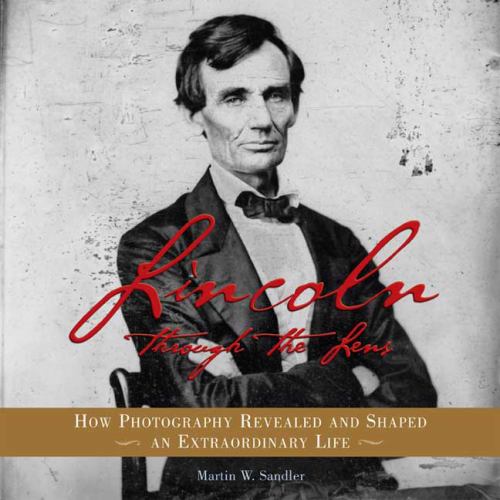
Lincoln Through the Lens by Martin W. Sandler


Hangin' with the Lincolns. 
Side note: I'm a big fan of Abe Lincoln. My bf and I even went to the Abraham Lincoln Presidential Library & Museum in Springfield, Illinois. After reading Bill O'Reilly's book, "Killing Lincoln", it was the perfect field trip. 

Nelson Mandela: Long Walk to Freedom by Chris Van Wyk


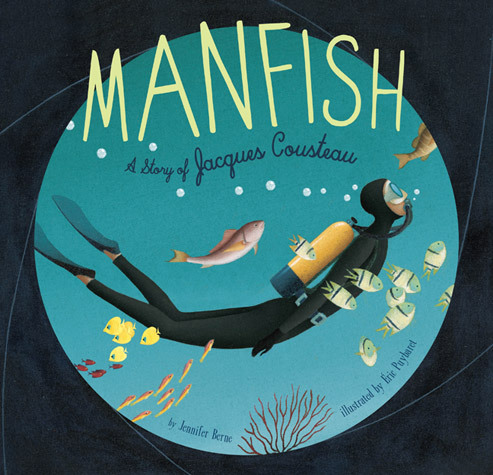
Manfish: A Story of Jacques Cousteau 


Those were my favorites from the list. Then, I started searching for biographies on my own. Here's a few that I think sound pretty interesting!

The Watcher: Jane Goodall's Life With Chimps


Balloons Over Broadway: The True Story of the Puppeteer of Macy's Parade by Melissa Sweet


Harry Houdini: The Legend of the World's Greatest Escape Artist by Janice Weaver


Me...Jane. by Patrick McDonnell


One of the keynote speakers rattled off several authors that she was a fan of. I quickly jotted them down and here are the nonfiction authors she recommends.

Nic Bishop (several titles by him)


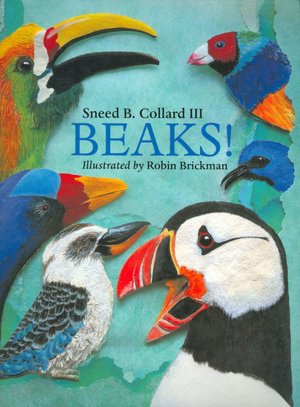
Sneed Collard III


Do you love nonfiction as much as I do? What nonfiction books do you use in your classroom?

Monday, April 30, 2012

Nonfiction Matters!

I'll let you in on a little secret about me. I absolutely love teaching nonfiction. I'll let you in on a second secret about me, I didn't really have any feelings towards nonfiction until last year. My action research project for my Masters program revolved solely around the importance of nonfiction in the elementary classroom. After reading gobs and gobs (gobs x 100) of research on nonficion, I quickly grew to love it.

After our Jaguar unit, I wanted to dip into nonfiction a bit. So, guess what? We did. Have you heard of Stephanie Harvey? Most of you probably have, you may even own this book --


Well, I used Harvey's book Nonfiction Matters to develop a little quick review on nonfiction for my kids. Here's an overview of what we did.

Day one: Anchor Chart! Woot woot. I love anchor charts too. We answered the age old question, "Why do we read nonfiction?"According to Harvey, here are some stellar reasons WHY we actually read nonfiction:

Yes, I spelled acquire wrong. Whoops!
Day Two: We tackled those pesky expository text structures. Harvey suggested using an example of "goosebumps" for each text structure. As a class, we created a foldable and labeled each type of text structure. Then, inside the flap, students wrote down and illustrated an example of the text structure with goosebumps. Make sense? Not quite? Okay, let me back up.


For example, one expository text structure is cause and effect. We wrote the follow example:
"The temperature dropped to 45 degrees. I got goosebumps." This is an example of cause and effect. Harvey lists an example of each structure relating it back to goosebumps. It was an excellent illustration of the different ways nonfiction can be written.

NEXT time, I would like to start the year off with this activity. First, we can identify WHY we read nonfiction and the various text structures. Then, the next day, compare reading nonfiction to fiction! We can answer the question of why we read fiction and compare how fiction stories are set up much differently. I'm getting all tingly on the inside just thinking about it. Stop me before I get too nerdy.

Sounds like I've got a week planned for the fall!

What exciting nonfiction lessons do you do with your kiddos?

Add This

LinkWithin

Related Posts Plugin for WordPress, Blogger...